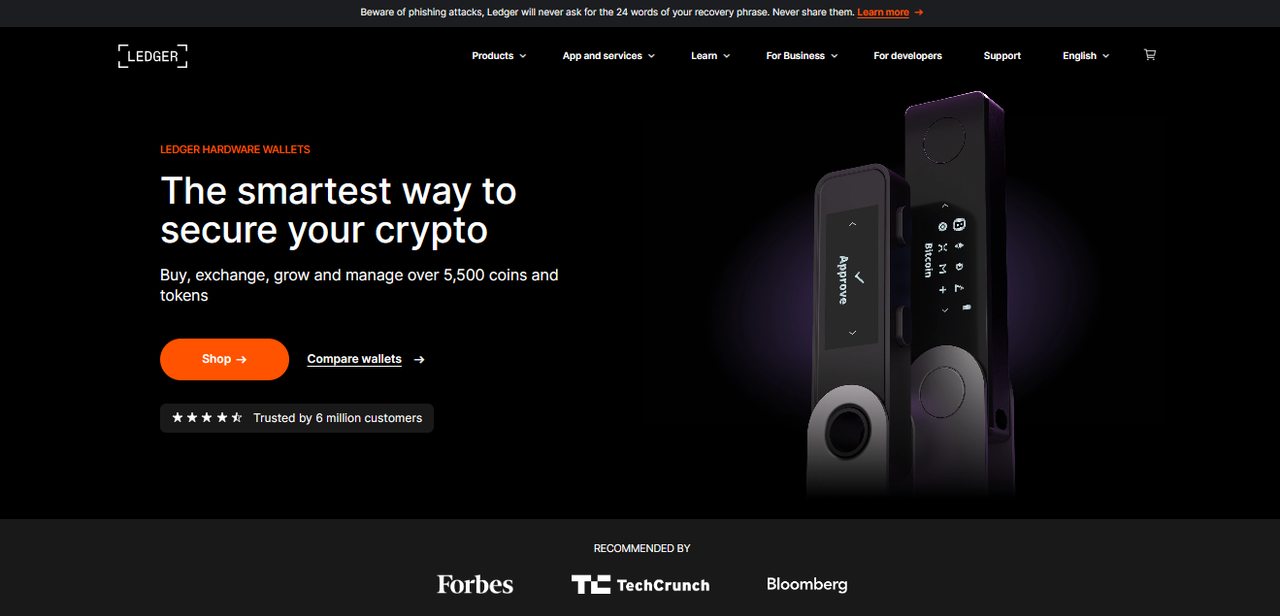
If you’ve just purchased a hardware wallet from Ledger and you’re ready to take control of your cryptocurrencies — especially Bitcoin and Ethereum — this walkthrough is for you. It’s written with real-user experience in mind, backed by best-practice security, and designed to provide you with friendly, expert guidance. We’ll cover everything from first unboxing to sending crypto safely, all while keeping your private keys offline in cold storage.
Before starting your setup, ensure you have the following ready:
1. Unbox and inspect your device
Inspect the packaging carefully. The box seal should be intact, and nothing should appear tampered with. If you notice anything unusual, stop and contact Ledger support before continuing.
2. Visit the official onboarding portal
Go to ledger.com/start for verified setup instructions and downloads. Never trust links shared via email or social media, as fake sites are common phishing traps.
3. Download and install Ledger Live
Download the official Ledger Live app for your platform (Windows, macOS, Linux, iOS, or Android). Follow the on-screen instructions and click “Get Started.”
4. Connect and initialize your device
Plug in your Ledger hardware wallet via USB or pair via Bluetooth. Choose “Set up as a new device.” Then create a PIN code (4–8 digits). Use a unique combination that you’ll remember but is not easily guessable.
5. Write down your 24-word recovery seed
Your device will generate a recovery seed of 24 words. Write them down carefully and in order. Confirm them as prompted by your Ledger device. Store this seed offline — never share, photograph, or upload it. This seed is the only way to recover your wallet if your device is lost or damaged.
6. Verify device authenticity
Ledger Live automatically checks whether your device is genuine through the Secure Element. If verification fails, stop immediately and contact Ledger Support.
7. Install apps & add crypto accounts
Open the “Manager” tab in Ledger Live to install cryptocurrency apps such as Bitcoin and Ethereum. Then go to “Accounts” → “Add Account” for each currency. Your private keys remain in your Ledger’s Secure Element, while Ledger Live only displays account data.
8. Receive and send crypto securely
To receive: In Ledger Live, choose your account → click “Receive” → verify the address on both the device and app before sharing it.
To send: Select “Send” → input recipient and amount → verify and approve the transaction on your Ledger device. This physical confirmation ensures top-tier protection from malware and hackers.
9. Keep your device and firmware updated
Update Ledger Live and device firmware only from official sources. Avoid downloading from third-party websites. When not in use, store your device safely in a secure, dry place.
The entire setup process takes roughly 15 minutes — but the security benefits are lifelong. Remember: your recovery seed is the master key to your funds. Never share it, never enter it online, and treat it like the keys to your digital vault. Following these steps ensures you uphold crypto’s core principle: “Not your keys, not your coins.”
The recovery seed is a 24-word backup phrase generated by your device during setup. It allows you to restore your wallet on another compatible device if yours is lost or damaged. Keep it offline and private at all times.
Ledger recommends using the official Ledger Live app (desktop or mobile) for setup and management. Browser extensions can connect to Ledger but may lack complete firmware support and security features.
No. Ledger Live is simply an interface for managing your crypto. Your private keys remain secured within the Ledger’s Secure Element chip and never leave the device.
Write the 24 words on paper or a metal backup. Store them in a fireproof, waterproof safe. Never save them digitally or online. Consider storing duplicates in two separate secure locations.
Yes. Even if you only hold major coins like Bitcoin or Ethereum, a Ledger wallet offers unmatched cold storage security for long-term crypto protection.
No. Without your PIN and recovery seed, the device alone is useless to an attacker. Always use a strong PIN and safeguard your seed separately.